The Hill
The Hill is the low, green rise in the heart of the Shire on which Bilbo Baggins's luxurious hobbit-hole, Bag-End, is built. It is the fixed point around which the entire narrative of The Hobbit revolves: the place from which the adventure begins and to which it finally returns. For the hobbits who live in its neighbourhood, The Hill is synonymous with respectability, comfort, and a settled, uneventful life. The Bagginses had lived in the neighbourhood of The Hill for time out of mind, and people considered them very respectable, not only because most of them were rich, but also because they never had any adventures or did anything unexpected. The Hill is thus the embodiment of the ordinary world that the hero must leave and, transformed, re-enter.
Identity and Description
The Hill is a specific, named feature of the landscape, located across The Water from the village of Hobbiton. Bilbo's home, Bag-End, is a tunnel dwelling burrowed directly into its side. The tunnel wound on and on, going fairly but not quite straight into the side of the hill—The Hill, as all the people for many miles round called it. The best rooms were on the left-hand side, the only ones to have windows, deep-set round windows looking over his garden, and meadows beyond, sloping down to the river. The Hill is thus not merely a geographical feature but a domestic space, the very definition of home for Bilbo. It is the place where he stands at his door after breakfast, smoking an enormous long wooden pipe, when Gandalf first arrives to set the adventure in motion.
The Hill as a Symbol of Home and Respectability
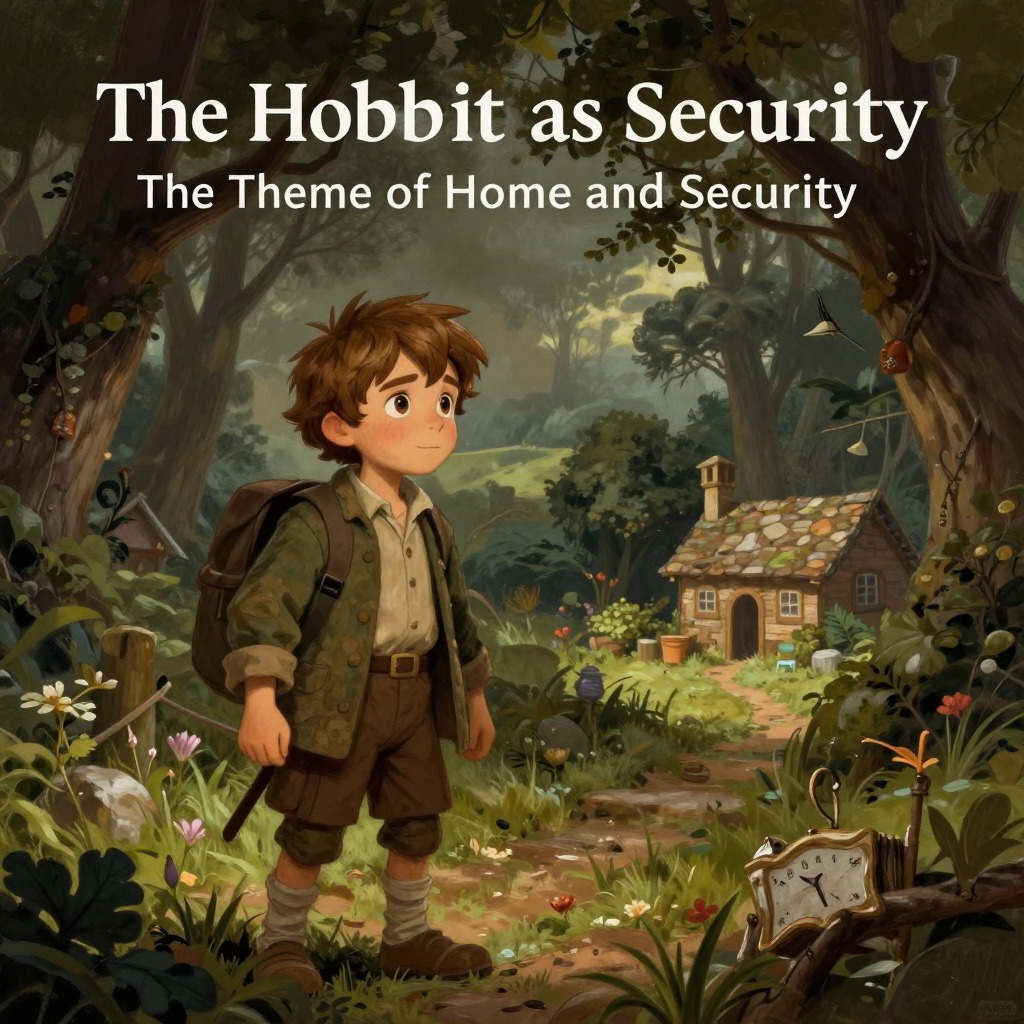
The Hill represents everything Bilbo is initially reluctant to leave: security, predictability, and the high regard of his neighbours. The narrator explicitly frames the story as one of how a Baggins had an adventure, and found himself doing and saying things altogether unexpected, noting that he may have lost the neighbours' respect. The Hill is the locus of that respectability. When Bilbo, deep in the goblin tunnels, wishes again and again for his nice bright hobbit-hole, it is the image of The Hill and his home under it that he longs for. Even at the height of his adventure, when he sits on the doorstep of the Lonely Mountain, he stares away west through the opening, over the wide lands to the black wall of Mirkwood, and to the distances beyond, in which he sometimes thought he could catch glimpses of the Misty Mountains small and far—but his thoughts are of what lay beyond the blue distance, the quiet Western Land and the Hill and his hobbit-hole under it.
The Hill as a Point of Departure and Return
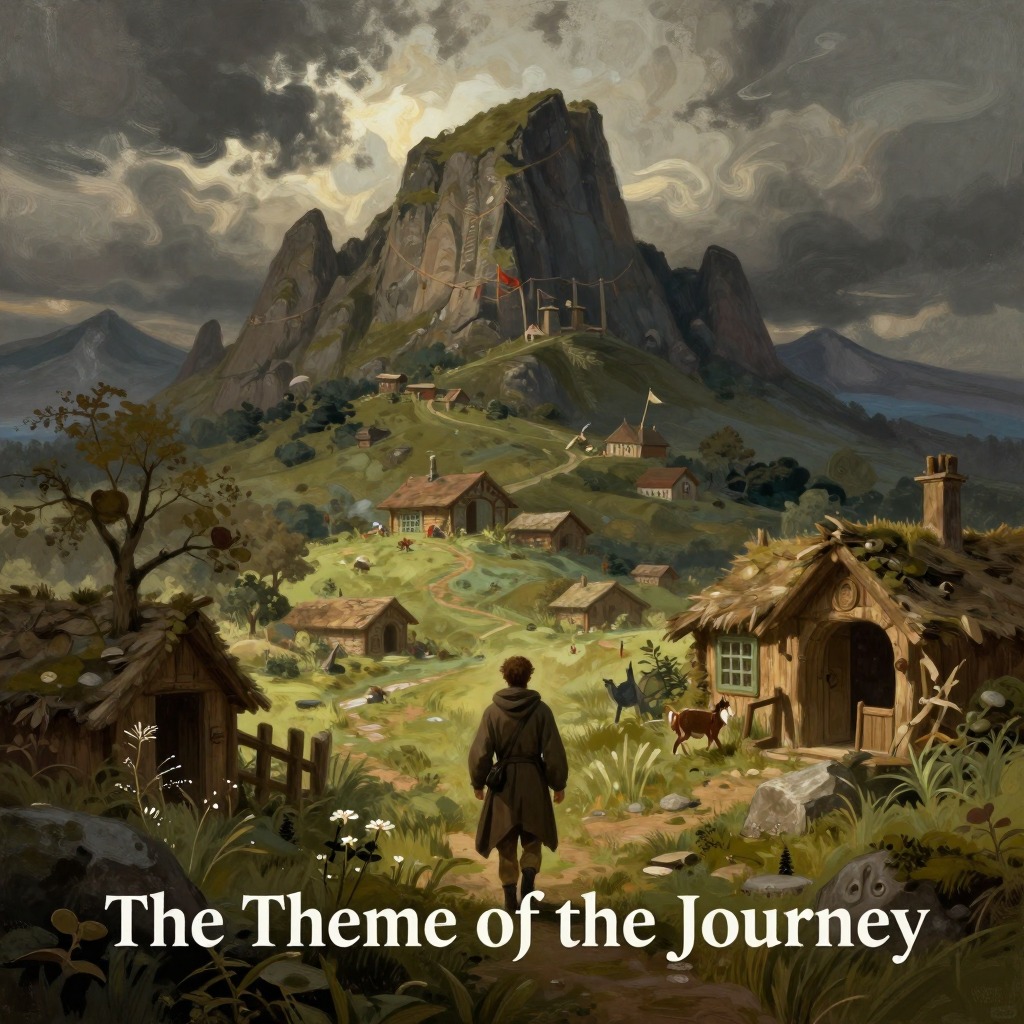
The Hill is the narrative's alpha and omega. The adventure begins when Gandalf arrives there and, through a series of manipulations, sends Bilbo off with the dwarves. The journey is consistently measured against the memory of The Hill. When Bilbo looks back from the Misty Mountains, he knows that far, far away in the West, where things were blue and faint, there lay his own country of safe and comfortable things, and his little hobbit-hole. The return journey culminates in the sight of his own Hill in the distance, where he stops suddenly and recites a poem about roads that go ever on, yet feet that wandering have gone turn at last to home afar. The final chapter, "The Last Stage," brings him right back to his own door, where he finds his belongings being auctioned off because he was presumed dead.
Transformation and the Changed Hobbit
The Hill is also the stage for Bilbo's personal transformation. He returns to find that he has lost more than spoons—he has lost his reputation. He is no longer quite respectable, held by all the hobbits of the neighbourhood to be 'queer.' Yet he does not mind; he is quite content. The sound of the kettle on his hearth was ever after more musical than it had been even in the quiet days before the Unexpected Party. The Hill remains his home, but his relationship to it has changed. He takes to writing poetry and visiting the elves, and though many shake their heads and say "Poor old Baggins!" and though few believe any of his tales, he remains very happy to the end of his days. The Hill, once the symbol of a narrow, unadventurous life, becomes the haven of a hobbit who has seen dragons and goblins and returned, forever marked by his journey.
Narrative Significance
The Hill functions as the primary chronotope of the ordinary world in the hero's journey structure of The Hobbit. It is the baseline of normality against which all the strange and perilous events of the quest are measured. Its repeated invocation throughout the story—in moments of fear, homesickness, and final contentment—anchors the reader's understanding of what Bilbo has sacrificed and what he has gained. The Hill is not just a place; it is a state of being, and Bilbo's return to it, changed yet at home, is the story's final, quiet resolution.